by Mary E. Ulrich | Apr 24, 2026
Hi Everyone. Are you getting ready for a vacation? I thought you might like to read about the family trip that changed our lives.
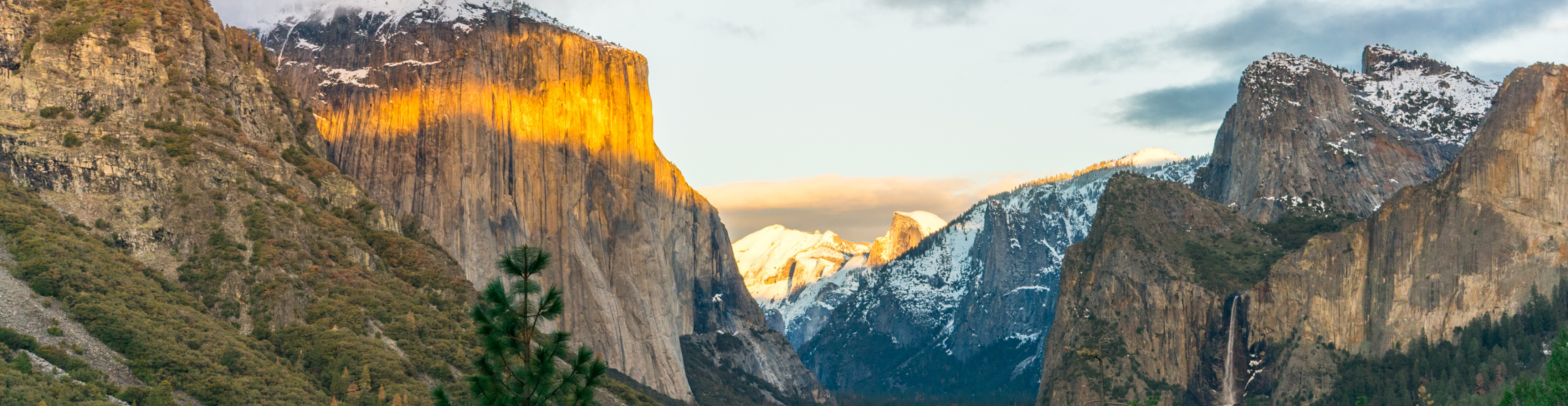
Oh, Beautiful for Spacious Skies…
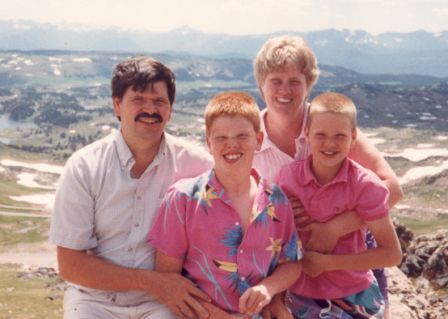
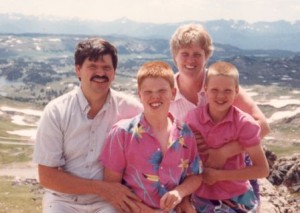
From the moment I was pregnant, my husband Tom dreamed of the day he could retrace his childhood trip out west. He glowed in the memories of mom, dad, and kids studying the maps on the kitchen table, packing the lunch meat sandwiches in the cooler, and repeating the rest-stop conspiracy of Dad throwing the baseball high over his boys’ heads so they would chase the ball and use up some of that stored energy. The year our son Aaron was ten and his brother Tommy turned nine, faithful to Ulrich family tradition, we headed west.
The main difference between my husband’s family, and ours, was Aaron has autism.
Preparing for the trip
Aaron didn’t start walking until he was five, and at ten was not completely independent in the bathroom. So how were we going to follow his needed routines for toileting, understand Aaron’s wants without the use of words or signs, watch his balance issues, and especially, cope with unpredictable behaviors? How were we going to manage twenty-one days of camping, sleeping, eating, and interacting with strangers in strange places? How were we going to survive–much less enjoy–visiting eleven National Parks and Monuments, twelve states, Mexico, and traveling five thousand miles?
Certainly, we were not the first family to attempt a Western vacation with a child with complex needs, but we also knew we were not going to be “typical” tourists. Tom and I briefly considered leaving Aaron with a friend or in summer camp, but we decided this dream vacation included our “whole family.” We would make it work.
Adaptations and Accommodations
What could be more All-American?
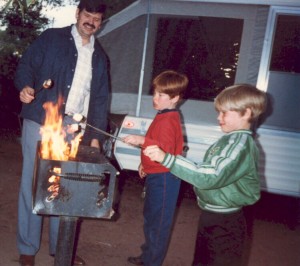
Using our teaching and parenting skills, we designed adaptations and accommodations for the trip. In previous years we camped in state parks and all shared a big tent. Aaron had a terrible time sleeping on the ground in such close quarters and often our sleeping bags got soaked in rainstorms, so for this adventure, we decided to buy a pop-up camper.
Our pediatrician recommended some medication to help Aaron relax and sleep at night. We planned to follow Aaron’s schedule for meals, breaks, and sleep. We would only visit restaurants at non-peak hours, choose corner tables, avoid long waits, and skip most museums. We installed a child-proof lock on the car door and had a suitcase of games, music, and snacks. Tommy and Aaron’s jobs on the trip were to crank up the camper each night and help carry the water buckets — jobs that were successful in our previous trips.
Oh, Beautiful for Pilgrim Feet…
Like the pioneers of old, and Tom’s family a generation earlier, at dawn our family set out from Cincinnati with Tommy’s version of a “Colorado or Bust” sign taped to the windshield, driving not oxen-pulling-a-Prairie-Schooner, but a brown-station-wagon-pulling-a-pop-up-camper. We were confident we could handle any challenges we knew would come. We would enjoy our family time and see the beauty of America. Fortunately, instead of mud and rock trails we had interstate roads and could travel at sixty MPH.
We Americans like to brag about being the melting pot and/or salad bowl of the world, a nation that values brotherhood and diversity.
Even with our best preparation, instead of a three-week vacation, this became a three-week teaching excursion. It seems the human America was not quite ready for us.
At home we were surrounded by people who knew us; they saw the beauty in Aaron and our family. With the strangers we met on our journey, we had both negative and positive interactions.
Transformational Experiences, day after day
As if we had a disease, one family packed up their tent and moved it to a site on the other side of the campground, and a pregnant woman crossed the street so she wouldn’t have to pass us.
One evening Aaron was enjoying the loud echoes he could make in the campground bathhouse, and a young boy ran out screaming, “The Hulk, the Hulk’s in there!”
An elderly man said, “We have one of ‘those’ in our family but he doesn’t travel, he lives in a home.”
“Mom, what’s wrong with that boy? Does he act that way on purpose?” The mother whispered, “SHHH, he’s retarded,” and like we were dangerous, yanked the child’s arm and dragged him away.
“Have you tried the Feingold or gluten-free diet?” or, “I know an allergist in Illinois who can get kids like that to talk.” It seems many people think they have the right to offer advice. I am sure they think they are helping, but do they really think we were so desperate we needed a consultation standing in line at the grocery? We struggle with the question: Can Aaron ever be accepted just the way he is, or does he only have value if he is “fixed” or “cured”?
In Arizona, we were asked to leave a family-style restaurant because, as the manager said, “We don’t serve people like him.” Tom and I were shocked because Aaron was happily eating his pancakes. If he had been noisy or disruptive we would have understood but he was acting as normal as anyone. Sobbing, I hurried Aaron to the car wondering what we were going to do a thousand miles from home. I realized this was the lowest point of the trip and saw a glimpse of the discrimination that has followed individuals of other ethnic and racial groups. The stigma of being asked to leave a restaurant because some anonymous person didn’t like the way my son “looked,” and the management’s open prejudice presented an uncomfortable dark side of America I will never forget.
Oh, Beautiful for Heroes Proved…
Our trip would have been devastating if only bad things happened, but we actually had some very positive experiences.
People would ask with smiles, “Where are you from?”, “Where did he get that red hair?” or “How old is he?” Just ordinary questions, but kind gestures and communication starters.
A parent of a child with Down syndrome commented, “I hope the programs in Ohio are better than in Missouri.”
One young girl smiled at us, “We have special kids in our school. My best friend’s name is Brian, he reminds me of him.”
Several children sought seats next to Aaron and Tommy on a park swing, maybe just for a closer look, but they made eye contact and tried to make Aaron smile. Several gently pushed Aaron on the playground swings, and merry-go-round, and gave him a turn kicking the soccer ball.
Aaron pinched me when we were rocking violently on a small plane sight-seeing ride over the Grand Canyon, the pilot said: “Don’t worry, I’ve had grown men reach over and hold my arm.”
At one roadside park, all the visitors collectively held their breath as Aaron climbed the steps up a steep slide. Tommy guided him to the top where after much arm-flapping and nervous hand-biting Aaron finally let go. As the wind struck his face and he barreled down the slide Aaron’s expression was one of absolute joy. Everyone in the park clapped and cheered. This was not just a glorious moment for Aaron; this was a glorious moment for every person in the park.
In a swimming pool in Arizona, a lifeguard got in the water during her break and showed Aaron how to swim on his back.
On a train ride in Silverton, CO a little girl moved into the seat next to Aaron and taught him an adapted version of the game Connect Four.
A waiter in Mexico brought Aaron an extra pack of crackers while we waited for our meal and tried to entertain him by singing Old McDonald in broken English. He even helped cut up Aaron’s food. His empathy and understanding crossed national and language barriers.
Universal Design and Inclusion
In the National Parks, we found many examples of universal design: accessible water fountains, paved paths, and self-guided tours enabled us to partially participate in the park activities. Several of the campground managers gave us campsites close to the restrooms. At Carlsbad Caverns, New Mexico there were benches and a bypass for the steep climbs. A small work crew with disabilities in Grand Canyon National Park did yard work, and a waitress at Canyon De Chelly used sign language to take an order from a customer. These inclusive accommodations not only made it easier on us, they actually made us feel welcome.
Survival means Adapting to the Environment
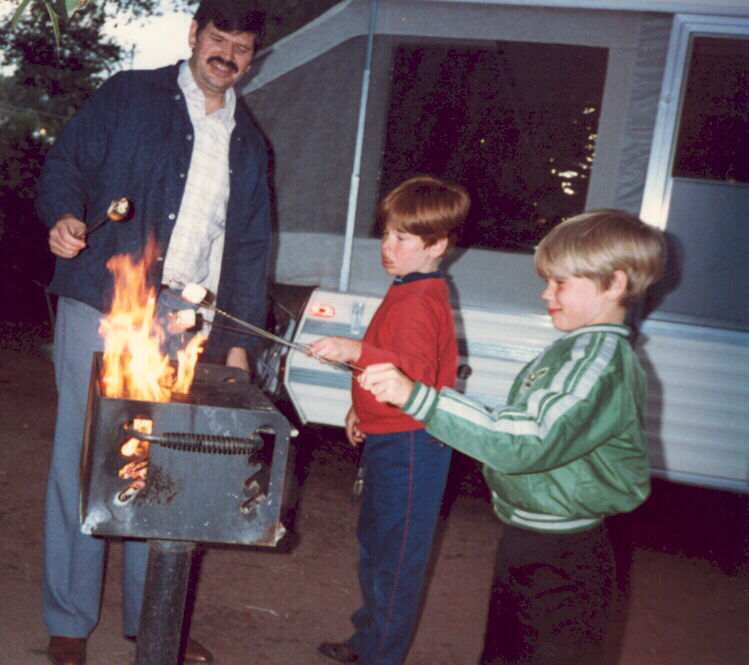
We were ambitious. We flew above the Grand Canyon and went down into the caves of New Mexico. We had a lovely lunch at the Broadmore Hotel with water goblets and doilies but were asked to leave a family-style restaurant. We drove to the top of Pike’s Peak and the whole family climbed the ladders of Mesa Verde’s Cliff Palace. We saw Native Americans adapt and survive their desert environment by seeing the value of every living plant and creature. We tasted jelly and saw sewing needles made from a cactus. We heard wolves howling, and we howled back singing every song we knew around the campfire. We took pictures and made memories that will last a lifetime. And perhaps like the Native Americans who live in the desert, we were learning how to adapt to our environment.
Lessons from the Road
We were physically and emotionally exhausted. Many amazing things happened that brought our family closer together. At the same time, though, I feel Tom, Tommy, Aaron and I crossed the line.
We could no longer think of ourselves as a family with one member who happened to have a disability; we were truly a “disabled family.”
I am not trying to be shocking or dramatic. We just had to concede that most of the general public did not seem to have the motivation, information or skills to assimilate us into their version of a “typical family.”
We also learned we had no anonymity; we stood out even in the largest group. Five hundred people came to see the bats fly out of Carlsbad Caverns, but because of Aaron’s shout when the bats emerged; four hundred ninety-nine people were looking at us.
We learned that celebrating the diversity of the landscape of America includes seeing the beauty of the diversity of its people.
Planting Apple Seeds
Our experiences reinforced our commitment to the inclusion of people with disabilities to live, work, recreate, and go to school with their neighbors, brothers, and sisters. We cherished the positive experiences; the children we met gave us so much hope for the next generation of Americans and travelers. Like Johnny Appleseed on his trips out west, we tried to drop positive seeds that other pioneer families would nurture and see bear fruit. Perhaps a future Kodak moment for our country will include not only the beautiful American landscapes but also people like Aaron and our family.
Better than “The Buck Stops Here”
One last story: In Missouri, inside the Truman Memorial Museum with its high ceilings and big rooms, Aaron started, “vocalizing.” Oh, how it echoed. The guard approached us and said Aaron needed to be quiet or leave. Tom began to go when another tourist came running from across the room. He looked the guard in the eye and said, “How dare you speak to them like that. That young man is a citizen of this country and has a right to be here. Harry Truman was a strong supporter of the ordinary person. He, of all people, would want them to be here.”
As we pulled the car into our driveway, Tom and I wondered if it was worth it. Would we ever take another road trip? But like always, our children showed us the way. As Tommy ran into the house to be the first person in the bathroom, he called over his shoulder, “Next year I want to go to Florida!”
And crown thy good with brotherhood, from sea to shining sea!
Keep Climbing: Onward and Upward
All the best,
Mary
–
Copyright Ulrich 2000-2024
Original Work do not copy without Permission
by Mary E. Ulrich | Apr 23, 2026
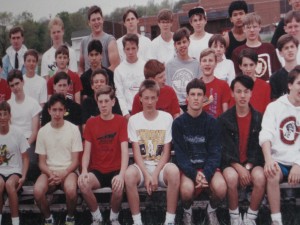
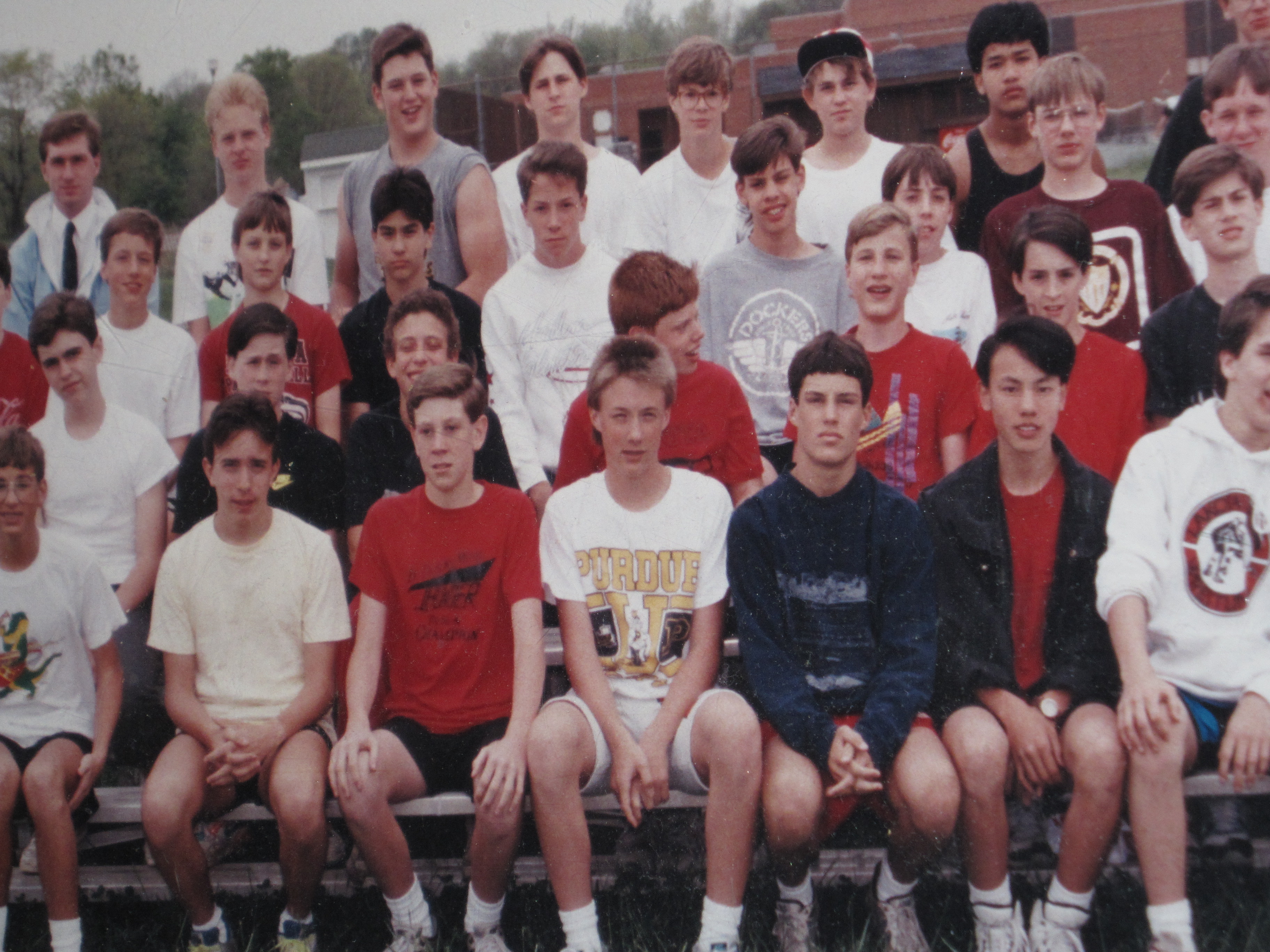
Aaron, Tommy and Cross Country Team
Tommy is in the second row. Of course, Aaron is the red head in the middle of the picture who refused to look at the camera.
My last post Teachers| Inclusion or Segregation started an interesting discussion. It reminded me of the letter I wrote to the Principal of Hopewell Junior School:
Letter to Principal on Last Day of Jr. High School
June 6, 1990
Principal, Hopewell Junior School
Lakota School District
West Chester, Ohio
Dear Dr. Taylor,
Recently my nephew, Robert, started laughing hysterically when I mentioned his cousin; Aaron was going to be on the school cross-country team. “What’s Aaron going to do? Bite and push all the kids at the starting line so he can win?”
I was deeply hurt but tried to explain it wasn’t all about the winning but the trying that was important. Robert was shocked! “But why would you even try if you knew you couldn’t win?”
Different Kinds of Winners and Losers
I explained there were different kinds of “winning.” Aaron has autism but he also has the need for belonging to a group and regular exercise. Robert stared blank-faced, and after several more minutes I changed the subject. To this gifted 14 year old, who has above-average good looks, athletic ability and intelligence, this made no sense. Sigh.
Robert, Tommy (Aaron’s brother) and their peers are the people on whom Aaron will always be dependent. They are the next generation of parents, professionals, neighbors and…coaches.
The experiences and value systems they are developing in school, in the community, on the cross country teams–right this minute—will directly affecting Aaron’s future.
Robert has never gone to public school, run on an inclusive cross-country team or been friends with people with physical and intellectual challenges. Obviously, even his experiences with his cousin have made little impact. I think that is a deficit in his education. It will impact his future as a member of his family and community. It’s not a visible “D” on his report card, but it is an invisible “deficit” and loss in his life.
Who are the Winners and Losers?
How do you teach that the person who comes in first is not always the biggest winner? Can children learn it takes courage for not just children with challenges, but for all the boys and girls who finish near the end?
WINNERS are sometime those who RISK losing…being laughed at…coming in last.
Learning and Teaching Values
Each nation decides what is normal, average and gifted. They decide who are the winners and the losers.
Recently, we’ve been stunned by news accounts which demonstrate how the values in Iran, China, and Russia are different from our own. We have also witnessed incredible changes in philosophy, public opinion and policy. Values are fluid, changing and dependent on multiple factors.
Shaping those values and rights is something we do every day, consciously, or unconsciously. Sometimes value changes are dramatic like the Berlin Wall coming down–winners. Sometimes value changes are dramatic like Tiananmen Square-winners/losers depending on your point of reference.
The rights of citizens are gifts from a nation to their citizens. These rights and freedoms cannot be taken for granted.
The tragedy of having a child with a disability has nothing to do with the child, a syndrome, disease or label. The tragedy comes from the struggle with people in your family, community, country who decide if they will accept and support your family or rejected and isolate you.
Whether the differences are overlooked or emphasized. Whether the winners are only the ones who come in first.
“But Wait until Junior High”
When we went to court in 1979 (Cincinnati Public Schools) to allow Aaron to go to the public school, the doomsayers predicted, “MAYBE it would work in elementary school…But wait until Junior High!”
The teachers care only about academics, the sports are so competitive, the kids are so cruel–during lunch they will put drugs in your child’s milk”
They hatefully wanted to frighten us into accepting the segregated school and a segregated life.
Last Day of Junior School
Today is our last day at Hopewell Junior School and happily those predictions are laughable. Thanks to the vision and caring of the administration, staff, teachers–especially Miss Linda Lee–and the other students in the school Aaron and his classmates have had a great experience.
They are the first class of people with significant disabilities who have been able to attend a regular public school. It has been a new experience for everyone and it has been a success.
Aaron has had many opportunities for learning functional skills which will help him live, work and participate in the community. But more importantly, he has had opportunities to be “included as a regular student.”
There were some who wondered why a kid, who can hardly talk, much less sing, would practice and perform on stage with the school chorus?
Why someone who has severe balance and flexibility problems would try to participate on the cross-county and track team?
They wonder if it be would have been safer if Aaron rode the “handicapped bus” with an extra aide, instead of the regular bus with his brother?
They will never understand why we hate Special Olympics?
These parents, students and community members can’t figure out what could Aaron possibly get out of an assembly, or six minutes in regular homeroom?
The answer to most of these questions then and now is really WE Don’t KNOW!
The schools are changing the future
Aaron has gifts, strengths and talents and when given opportunities for learning–determination and pride. We do have observations.
Each time a schoolmate says, “Hi” and forces Aaron to give eye contact, each time a teammate said, “Go Aaron, you can make it!” or gives him a high 5–it is a victory.
Each time they see Aaron make it over a creek or down a hill we celebrate.
Every time they see him complete his vocational job stacking juice cartons in the lunchroom, sorting the silverware, filling the pop machines–it is a value enhancing experience. Aaron can learn to do jobs, that if he didn’t do them, someone else would.
This year Aaron’s picture is in the yearbook next to his brother’s. He and Tommy’s picture is in also with the athletes for Cross Country and Track. A First!
A general education high school student cared enough to help Aaron participate in a bowling league. And then, he took him to the Eighth Grade Dance whose theme was “That’s What Friends are For.” A First!
Aaron’ name (granted it was a name stamp) was on the class t-shirt. A First!
Aaron got a school letter in cross country and track, including being in the team picture. A First!
Aaron got his first paycheck from his vocational training site, Grote bakery, allowing him to become a taxpayer. A jump-up-and-down first!
A whole lot of Learning
To me, these shifts in school philosophy, values and focus on inclusion are every bit as dramatic as the Berlin wall coming down.
In the current evolution to merge special and general education, to change special separate classes into a system of inclusive classes with support services for ALL children–the new ideas, opportunities, choices, risks and freedoms are truly exciting.
Hopewell Junior School has given Aaron and Tommy the chance to be winners. The chance to show that sometimes the biggest lessons are not just in the classroom.
Their success has been a victory.
Hopefully, in this human race, our world will become a better place because of the mix of people who grow up more fully with the experiences of community inclusion.
Thanks for your continued support. Thanks for making Hopewell—a Well of Hope.
Sincerely,
The Ulrich Family
Epilogue: 20 years later
Junior High turned out to be one of the best times in Aaron and Tommy’s lives. They both had caring teachers who looked at each of their individual needs. I wish we could find out what memories the other students had of their time with Aaron and Tommy in cross-county, track, bowling, choir, gym… I bet they would have some funny stories. I wish them all well.
ps. We often think of how the students are going to grow up and be the next voters, taxpayers, citizens… but we often forget the school staff also evolves. Aaron’s teacher, Miss Lee went on to become a district supervisor and Dr. Taylor, the prinicpal, is the current Superintendent of Lakota. I like to think their experiences with Aaron and Tommy influence who they are today.
Keep Climbing: Onward and Upward
All my best,
Mary
Comments:
Were kids with autism and severe disabilities included in your school? Do you have any thoughts to share? What do you think the future looks like?
A related story is What is Inclusion? plus, pictures of Aaron and Tommy at graduation.
by Mary E. Ulrich | Apr 22, 2026
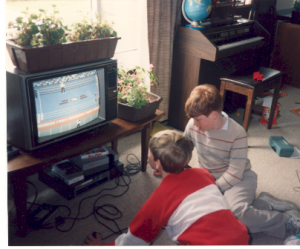
Aaron watching Tommy play video games
Is summer different for kids with and without disabilities?
As parents of children with disabilities, it is difficult to know “What is realistic?” “What goals do I want?”. I have always found it helpful to measure “normalization” by comparing the life of my son Tommy with his brother Aaron. Below are my thoughts about summer activities when the boys were young teens. The lessons I learned helped me cherish the final “inclusive” story below. Hope you’ll share your thoughts and success stories.
Tommy, my 13 year old son, with the label of “normal”:
Went to 2 weeks of Boy Scout camp, an experience which included a hike on the Appalachian Trail.
Had to choose between participating in baseball or soccer which included 2 practices a week and a game. In August he began daily training for the school cross-country team.
Was active in a neighborhood network of five boys who decided to start a Gaming Exchange Club. His friends called him the minute he arrived home from activities, played games until supper.
Was invited to stay overnight with a friend or cousin 3 times and his friends 5 times.
Had a season’s pass to a nearby amusement park and spent at least one day there each week with friends.
The days of summer flew by for Tommy. He had individual activities with friends, but also family activities which included a camping vacation and travel to a National Park. His major frustrations were either the lack of time for pursuing all of his interests, or his Mom’s suggesting he do something “dumb” like reading a book or practicing his clarinet.
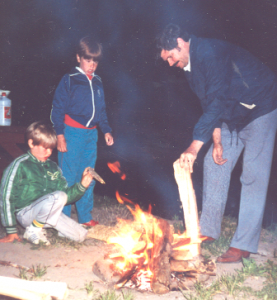
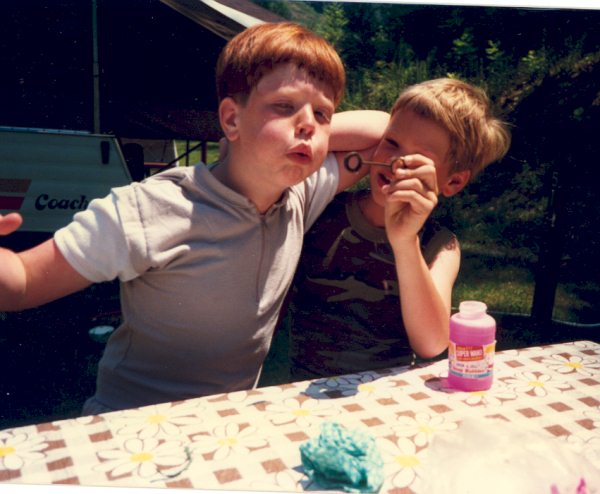
Our Family Camping Trip
Aaron, age 14, with the label of autism, intellectual and developmental disability:
Aaron went to two weeks of “special” camp: Easter Seals and Stepping Stones.
Aaron’s major activity was watching Tommy play baseball, video games…and riding in the carpool to drop off Tommy and his friends.
Aaron also has a pass to the amusement park, but can only go with an adult (his mother).
Aaron spends every morning saying, “bus, bus … ready, set, go.” When the school bus doesn’t come, he sometimes licks on the front window, bites his hands and puts on his coat and backpack. He can’t figure out why his routine is different from the other 9 months of the year.
Aaron also can’t figure out why we spend all winter telling him to keep the front door shut, and all summer telling him to keep the front door open (but that’s another story). *smile*
He was not invited to overnights with cousins or friends.
What’s the Difference?
As I contrast the lives of my two boys, I can’t help thinking…
• …perhaps I wouldn’t feel Aaron’s isolation and lack of contact with any friends or same-age peers if Tommy had fewer friends.
• …perhaps I wouldn’t worry about Aaron’s behaviors, physical condition, weight and stamina if he were occasionally an active participant, rather than always an observer.
• …perhaps our family will adjust eventually to the sadness (and stress) we feel knowing Aaron’s only opportunities come from mom, dad or brother…and realizing it may always be that way.
* …perhaps we wouldn’t feel so trapped if we could get respite regularly.
* …perhaps we’ll become accustomed to wearing a key around our necks so that the door can be locked with a deadbolt every time someone goes out or comes in (otherwise Aaron will run into the street or enter neighbors’ homes).
* …perhaps we’ll resign ourselves to our community’s “special” camps and “special” recreation programs, which effectively exclude Aaron from almost everything that is typical, regular, easily available and low cost.
* …perhaps hope will sustain us that someday a “community support” agency professional from somewhere, anywhere, could adapt, modify and begin to open community activities for Aaron and others.
* …perhaps/…oh perhaps…some wonderful person will believe that a community is more that a group of houses, businesses and people.
Summary: “Separate is Inherently Unequal.”
The tragedy of having a child with a disability has nothing to do with a syndrome, impairment or disease. Words such as autism, CP, and intellectual disabilities are just descriptors the same way hair color, height, race, sex and personality are descriptors. Children don’t start out life knowing they are different. The tragedy is the reaction of families, neighbors and society, which emphasize differences.
The conflict for people with disabilities and for their families comes when the community limits opportunities, segregates and restricts individuals’ choices (e.g. Handicap swim is Tuesday; 1:30-2:30 p.m. and General swim is Monday to Friday 8:00–5:00). If Aaron had an inclusive swim buddy, Aaron wouldn’t have to go to “handicap swim” but rather the general swim with the other kids.
It doesn’t matter that the limiting of opportunities appears, to have a good rationale or charitable intentions. Segregation limits freedom, limits choices, and limits development.
“Special” means segregated.
Our Olympic Moment of Inclusion
One hot July day, Tommy and his friends stopped by our house to make some peanut butter and jelly sandwiches for an impromptu picnic.
Unexpectedly, one of the boys asked if Aaron wanted to come along.
Five minutes later, all the kids were laughing, talking and riding their bikes to the park. One red-haired kid named Aaron was riding on his bike in tandem with his brother.
In about one hour the picnic ended and they brought Aaron back.
That was the highlight of Aaron’s whole summer.
Our Olympic Moment–not, Special Olympic Moment
That moment for Aaron was sort of like the experience of an Olympic ice skater, gymnast, American Idol singer who practices day after day hoping to “bring it all together” for one magic performance or “big break.”
It was a “victory” –a spontaneous, normalized recreation experience, without his mom! Ahhh (smile-sigh).
And now…back to work. But, perhaps, just perhaps…those wonderful, typical neighborhood kids will grow up more fully with the vision for and the experience of community integration and freedom. They are the next generation of soccer coaches, swim instructors, church and scout learners.
The change of inclusion has begun.
Keep Climbing: Onward and Upward
All my best,
Mary
Related Stories:
On the last day of Junior High School.
Dream Plan for Aaron–14 yrs old (Part 2).
America the Beautiful: A Family Vacation, Plus.
by Mary E. Ulrich | Apr 19, 2026
This story is from 1981 when Aaron was 7 and Tommy 5. We were in the middle of our lawsuit against Cincinnati Public Schools to allow Aaron to be able to go to public school. Enjoy.
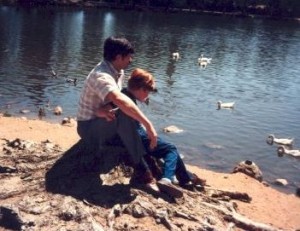 At the end of our street is a pond. Our family often takes walks down there to see the ducks and give them bread crumbs. One day last summer, an old man was down there and said: “Did you see the handicapped duck?”
Well considering I was pushing my seven-year-old son with a severe disability in his stroller, and considering the 24 hours a day I spend thinking about people with disabilities–this was really too much.
The friendly man went on, “Probably a frog ate his foot or maybe he caught it on the fence…”
Sure enough, there were about 40 ducks and one duck was missing his foot and about one-half of his leg. The duck hobbled toward us but when Tommy tried to pet him he scrambled for the bread crumbs with the rest and then swam away.
Before we left, we did throw him some extra bread crumbs just because we wanted him to know we were friends who understood life’s little extra challenges.
I went home and joked to my friends that at least some humane society didn’t come and set aside a special pond for disabled ducks, start a supplementary training program and segregated nesting area–or some exploiter didn’t take him to Utah and enter him in some freak show for tourists.
We checked in once in a while over the winter, but I really was a lot more worried about people with disabilities than the ducks. We were trying to mainstream Aaron, into a public school. (This was before “inclusion” was thought possible.)
Yesterday the weather was warm so we walked to the pond and saw there were only about 15 ducks. We were only there a minute when that same man came running down full of concern. He told us someone was catching the ducks, putting them in plastic bags, throwing them into the middle of the lake, and then watching them drown.
We were shocked. Who would do such a thing?
Meanwhile, the few ducks that remained came swimming toward us looking for the breadcrumbs. Guess What?
The “handicapped” duck was among the survivors.
I’m not sure what this all means or why I thought to write about it, but with all the cutbacks and anything else they can think up–I think the duck gave us a message–we’re going to make it. There are some mean horrible people out there, sure. But there are also wonderful people like the man who cared for the ducks. There is risk in being in the community–but that is also where there is safety.
This week Aaron learned to peel his own banana, he went boating and he saw a “handicapped” duck that was smarter than the non-handicapped ducks. We also just need to get smarter.
The dream… it lives!
Quiz: For those of you who read the story about the difference between disability and handicapped (click here) and tell me. Did our duck with the one leg have a disability, a handicap, or both?
Share your Stories of Hope
What helps keep your dreams alive? Any duck or pet stories?